Use this postpartum survival guide for everything you can expect from your postpartum body, what you should be looking out for, and how to recover quickly without complications.
What To Expect From Your Postpartum Body
So you have had your baby and you are full of the warm and fuzzies. Unfortunately this doesn’t stop the uncontrollable bleeding, utter exhaustion, untold drama in the bathroom, and the excruciating, never ending, burning hell that’s going on DOWN THERE.
Your Postpartum Survival Guide
Postpartum Timeline
- You will have moderate to heavy vaginal bleeding – What you need to know about bleeding after childbirth
- The vagina and perineum will probably be extremely painful
- Your uterus will start to contract back to it’s usual size
- You may experience some constipation in the first few days after giving birth
- If you had a c-section your incision site will be painful and you may have difficulty moving around – C-section recovery tips
- Your hormone levels will be changing which can cause you to feel very low, upset, and overwhelmed
- You will probably be feeling extremely tired – Find out how to beat postpartum fatigue here

- Your bleeding will probably be less heavy now
- You may feel itchy down below. This is nothing to worry about, it’s just part of the healing process
- If you had a c-section you will still be feeling sore and you may feel itchy around the incision site
- Your uterus will be getting smaller now although you may still have a small bump
- Your bleeding will become increasingly lighter and paler in color
- If you have dissolvable stitches they will begin to dissolve
- If you had a c-section you will find that you are more mobile now but be careful as you will still be vulnerable to muscle strain in your back.
- If you had an episiotomy this should have healed by now
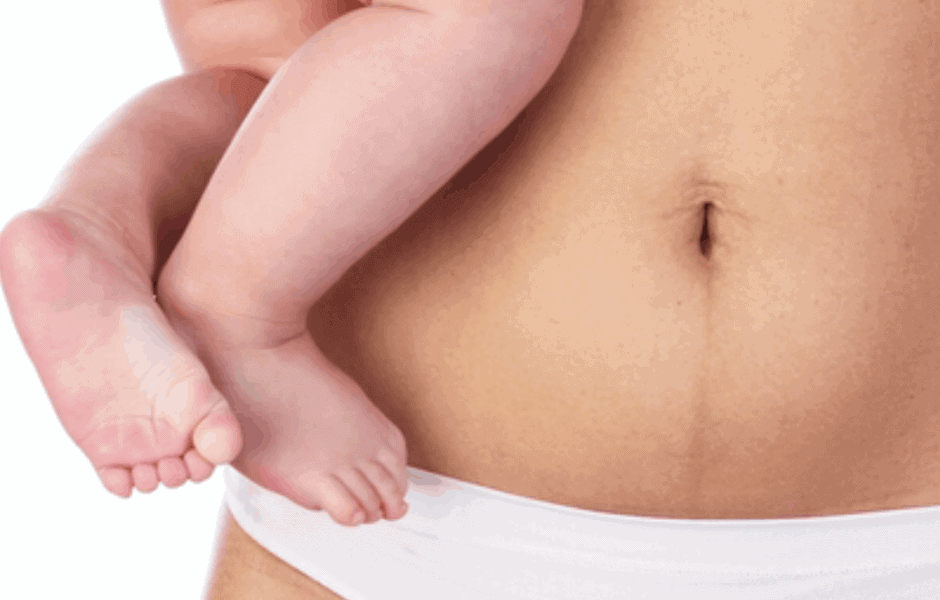
- You may find that you have loose skin on your belly from where it has been stretched to accommodate your bump
- Your bleeding should be very light pink now. If it is still red at this point see your doctor
- Your uterus should be close to it’s normal size now
- Any tears from a vaginal birth should have healed
- Any darkness around the nipples and the linea nigra will be starting to fade
- Due to hormone changes you make have a skin breakout and your hair may start to thin temporarily
- If you had a c-section you may feel twinges of pain, tension, and a pulling sensation
- Your uterus should be back to the size it was before you were pregnant
- You will have your postpartum 6 week check up
- Bleeding should have stopped
- It should be safe to resume sexual intercourse
- If you had a c-section you may have some numbness at your incision site. You will be cleared to drive, lift, and to do gentle exercise
What Will Happen To Your Postpartum Body?
– Your breasts may begin to sag. If you are not breastfeeding or when you stop you may notice some sagging. This happens because the skin will have stretched while your breasts were swollen.
– During pregnancy you won’t have lost much hair due to hormone overload. Once you have given birth you find that you will lose all of the extra hair that you accumulated during your pregnancy. Try not to panic, this may happen for about 6 months and then settle down.
– You may have some peeing issues after giving birth. You will find that you need to pee less often now that baby is out but may be less in control of things. You may not be able to hold it like you could before or you may find that the urge to pee sneaks up on you. Sending you racing off to the bathroom with little warning. If you find that sneezing, coughing, or laughing can cause you to leak a little then some pelvic floor exercises may be in order.
– Your normal period will return about 7 weeks after delivery, but only if you aren’t breastfeeding. If you are breastfeeding it will probably take quite a few months for your period to return. Some women find they don’t have a period until they have stopped breastfeeding altogether.
– After your baby is born the change in hormone levels could affect your skin. You may find that your skin breaks out, you have dry or dark patches, or that you have acne.
– You may find that you have stretch marks on you belly, hips, bottom and possibly even your legs. They won’t be in a hurry to go anywhere but should fade over time. They will start out bright red but usually fade to a white/silver color and will blend in with your skin more.
– During your pregnancy you were carrying some excess weight. This may have caused you to develop spider veins or varicose veins in your legs. They will never completely go away but will usually become less prominent over time.
– You may suffer from postpartum migraines or headaches. It can be common for headaches to begin in the first week postpartum.
Tips For Postpartum Recovery
Top tips for taking care of your postpartum body.
- Ice is your new best friend! Apply an ice pack to your vagina to help with pain and swelling. If you are breastfeeding, this also applies to sore swollen breasts.
- Use postpartum underwear and pads for the heavy bleeding. This will avoid any embarrassing leaks.
- Use a peri bottle, to give yourself a good rinse down there. This keeps you clean and reduces risk of infection.

- Take a 20 minute sitz bath up to 4 times per day. This will help with swelling and discomfort, and reduce the risk of infection. Once the healing process has begun you could add a soothing herbal preparation. Click here to find out how to take a sitz bath after birth
- Witch hazel pads really help with hemorrhoids. Line your maxi pad with them for best results.
- Try to avoid toilet paper in the postpartum period as it may irritate you more. Use medicated flushable wipes Peeing will be bad enough without feeling like you are scraping your own skin off each time you wipe.
- It’s going to be a few days before you can have a bowel movement. It’s not always the best experience so eat foods rich in fibre and take stool softeners to help make things a bit more comfortable. Using a topical pain relieving spray might also be a good idea.
- Drink plenty of fluids, try to keep a water bottle beside you at all times.
- Get some fresh air, go for a short walk but don’t overdo it on the exercise front.
- If you try to sit for long periods you will be in a whole world of pain. Lie on your side as often as you can, and when you do sit use a donut pillow This will relieve the pressure from that delicate area.
- Get as much rest as you can. Sleep when baby sleeps.
- Do pelvic floor exercises (kegels) to help tighten the pelvic floor muscles and get everything back in place.
- If you have cramping after delivery, you can take ibuprofen. It’s effective and safe to take while breastfeeding.
- Carry on taking your prenatal vitamins this is especially important if you are breastfeeding.
- Use Dermoplast This spray is amazing for helping to heal vaginal tears.
- After I had my baby my feet and ankles swelled so much I couldn’t put shoes on. This is really common after labour and can be relieved by wearing compression socks and soaking your feet daily.
- Wear loose comfortable clothing. Leggings probably aren’t a great idea with all the bulk of the maxi pads and postpartum underwear.

- Don’t forget nursing pads for those leaky boobs. You will have zero control over when it happens so always pop them in your bra just in case.
- If you have breast or nipple discomfort then these breast therapy packs work really well and can be used hot or cold depending on the problem.
- Last but definitely not least. Your hormones will be raging. Try to keep a stress free environment at all times. Try diffusing some lavender essential oil before you sleep.
Postpartum Warning Signs
- Severe pain when you pee.
- A high fever.
- Vaginal discharge with a bad odour.
- Extremely heavy bleeding.
- A fast heart rate.
- Confusion.
- Severe lower abdominal pain.
- Pain, redness, swelling, or heat in your legs.
- Dizziness and severe headaches.
- Chest pain, coughing, and breathing problems.
- Painful lumps or red streaks in your breasts.
- Swelling, pain, redness, or discharge from a c-section incision.
- Severe vomiting.
It’s true that dealing with your body in the postpartum period is no picnic but with a bit of preparation, self care, and using this postpartum survival guide you and your postpartum body should recover quickly.